
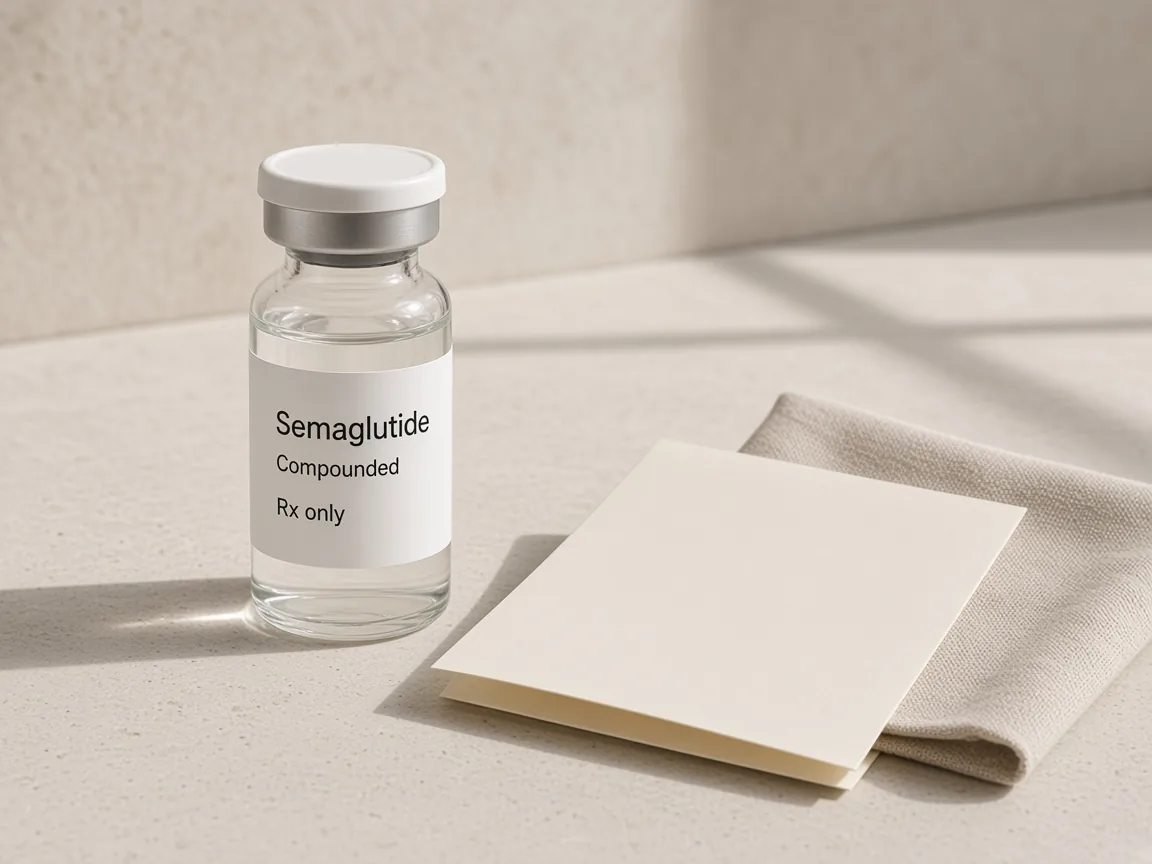
Semaglutide
- Class
- GLP-1 receptor agonist
- Form
- Once a week, injection
- Dose steps
- 0.25 mg, then 0.5, 1.0, 1.7, and 2.4 mg, increasing every 4 weeks
- vs. placebo
- 14.9% vs. 2.4% at 68 weeks (STEP 1, 2.4 mg)
- Head to head
- 13.7% at 72 weeks (SURMOUNT-5)
Semaglutide and tirzepatide are both once-weekly injections for weight management. Semaglutide acts on one gut hormone receptor (GLP-1), and tirzepatide acts on two (GIP and GLP-1). In the one large head-to-head trial, people on tirzepatide lost more weight on average, but both have similar side effects, and a clinician decides which, if either, suits you.
Trial results come from the FDA-approved brand-name drugs, not compounded versions. Averages describe groups, and your results may differ.
Start your online visitYou choose semaglutide or tirzepatide. Semaglutide is from $79/mo when prescribed. Tirzepatide is from $89/mo when prescribed. Online visit.
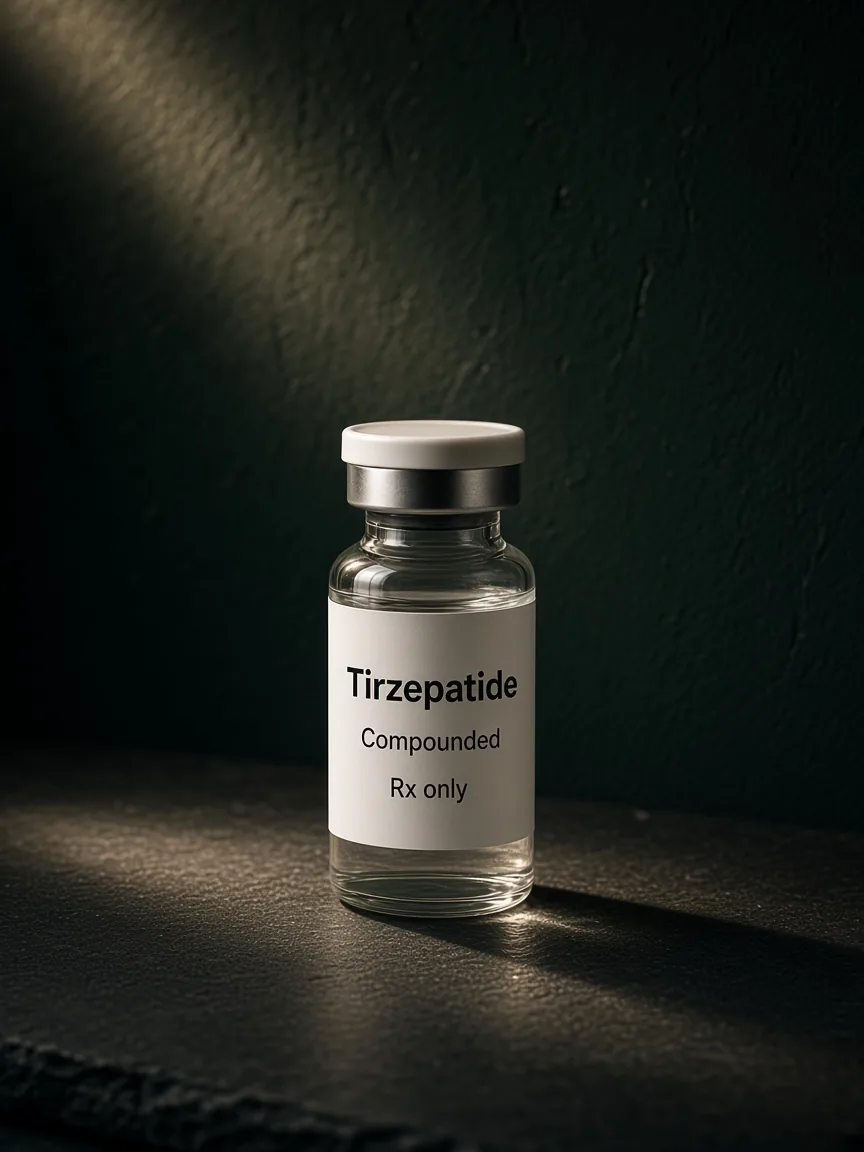
from$89/mo
when prescribed (compounded)
Dual GIP and GLP-1 receptor agonist, once a week. 2.5 mg, then up 2.5 mg every 4 weeks, to 5, 10, or 15 mg. 15.0%, 19.5%, 20.9% vs. 3.1% at 72 weeks (SURMOUNT-1, 5/10/15 mg). 20.2% at 72 weeks in SURMOUNT-5.
Start your online visitTrial results come from the FDA-approved brand-name drugs, not compounded versions.
| Semaglutide | Tirzepatide | |
|---|---|---|
| How it works | GLP-1 receptor agonist | Dual GIP and GLP-1 receptor agonist |
| How often | Once a week, injection | Once a week, injection |
| Dose steps in trials | 0.25 mg, then 0.5, 1.0, 1.7, and 2.4 mg, increasing every 4 weeks | 2.5 mg, then up 2.5 mg every 4 weeks, to 5, 10, or 15 mg |
| Average weight loss vs. placebo | 14.9% vs. 2.4% at 68 weeks (STEP 1, 2.4 mg) | 15.0%, 19.5%, 20.9% vs. 3.1% at 72 weeks (SURMOUNT-1, 5/10/15 mg) |
| Head to head (SURMOUNT-5) | 13.7% at 72 weeks | 20.2% at 72 weeks |
| Common side effects | Nausea, diarrhea, vomiting, constipation, stomach pain | Nausea, diarrhea, vomiting, constipation, stomach pain |
| Rxely price | From $79/mo | From $89/mo |
Averages describe groups, and your results may differ. Check your BMI
Both medications copy hormones your gut releases after you eat. Semaglutide activates the GLP-1 receptor, which slows stomach emptying and signals fullness to the brain. Tirzepatide activates the GLP-1 receptor and the GIP receptor, a second hormone pathway involved in appetite and blood sugar.
Each is a weekly injection under the skin. Both start at a low dose and go up in steps about every four weeks, which helps your body adjust. In the trials, semaglutide moved from 0.25 mg toward 2.4 mg over 16 weeks, and tirzepatide started at 2.5 mg and rose by 2.5 mg steps. Your clinician sets your own schedule and may hold or lower a dose based on how you feel. Every tirzepatide step is laid out in the tirzepatide dosing chart. Ours is compounded tirzepatide, from $89 a month.
All three trials paired medication with diet and activity counseling and studied the brand-name drugs, not compounded versions.
The most common side effects for both are nausea, diarrhea, vomiting, and constipation. In the trials, most were mild to moderate and showed up while the dose was increasing.
Boxed warning
Both carry a boxed warning about thyroid C-cell tumors seen in rodent studies. They are not for people with a personal or family history of medullary thyroid carcinoma or multiple endocrine neoplasia syndrome type 2. Other serious risks include pancreatitis and gallbladder problems. Talk with a clinician about your history before starting either one.
Some people lean toward semaglutide because it has been in use longer and starts at a lower price. Others lean toward tirzepatide because of the larger average weight loss in SURMOUNT-5. You choose which one to request. A licensed clinician reviews your health history and decides whether to prescribe it.
Not sure you're in range? Use our BMI calculator first, or start your online visit.
In SURMOUNT-5, a 72-week head-to-head trial of the brand-name drugs, people on tirzepatide lost 20.2% of body weight on average, compared with 13.7% on semaglutide. Results vary from person to person, and the trial did not study compounded versions.
Yes. Both are injected under the skin once a week. The dose starts low and goes up in steps about every four weeks.
Both have similar side effects. The most common are nausea, diarrhea, vomiting, and constipation, mostly mild to moderate and most frequent while the dose is going up. Your clinician can help you weigh this against your history.
Yes, you choose semaglutide or tirzepatide in your assessment. A licensed clinician then reviews your health history and decides whether to prescribe it.
Compounded semaglutide plans start at $79/mo and compounded tirzepatide plans start at $89/mo. You pay for medication only if a clinician prescribes it.
No. Compounded medications are prepared by a licensed pharmacy and are not FDA-approved. They are not the same as Ozempic, Wegovy, Mounjaro, or Zepbound, and the trials on this page studied the brand-name drugs.
Prescriptions are filled by two licensed pharmacies: Rush Pharmacy and Epiq Scripts.
Care is provided by licensed clinicians through LocumTele, an independent network of licensed clinicians.
Yes. Rxely is available in all 50 states. Eligibility is decided by a licensed clinician after your assessment, and a prescription is not guaranteed.
If prescribed, cold-pack medications ship next-day. Non-sterile medications ship by ground. Each order comes with written instructions.
We don't offer refunds on medication. We replace it instead.